How vocoder plug ins work: modulator, carrier and bands
Every vocoder has two inputs. The modulator is the voice: the vocoder splits it into bands and follows how loud each band is. The carrier is the sound that gets shaped, usually a bright synth playing chords. The vocoder filters the carrier through matching bands at the voice's levels, so the synth picks up the vowels and consonants while keeping its own pitch.
Three things decide how good it sounds. A carrier rich in harmonics (saws, supersaws, pulse waves) gives the bands something to shape. More bands make words clearer; fewer sound more robotic. And sibilance handling matters, because S and T sounds are noise, and a vocoder that ignores them turns every word to mush. Our explainer on what a vocoder is covers the history and the signal flow.
Types of vocoder VST plugins compared
Stock DAW vocoder
- How it works
- You route a synth in as the carrier
- Good for
- Learning the effect, no extra cost
- Examples
- Ableton Vocoder, Logic EVOC 20 PolySynth, FL Studio Vocodex, Reaper ReaVocode
Free vocoder plugin
- How it works
- Usually a classic, vintage-style design
- Good for
- Retro robot tones
- Examples
- TAL-Vocoder
Vocoder with built-in synth
- How it works
- The carrier synth is inside the plugin
- Good for
- Fast choirs, pads and leads with no routing
- Examples
- Choir (ours), Arturia Vocoder V
Harmonizer (not a vocoder)
- How it works
- Pitch-shifted copies of your real voice
- Good for
- Natural backing harmonies
- Examples
- Tune's Harmony mode (ours)
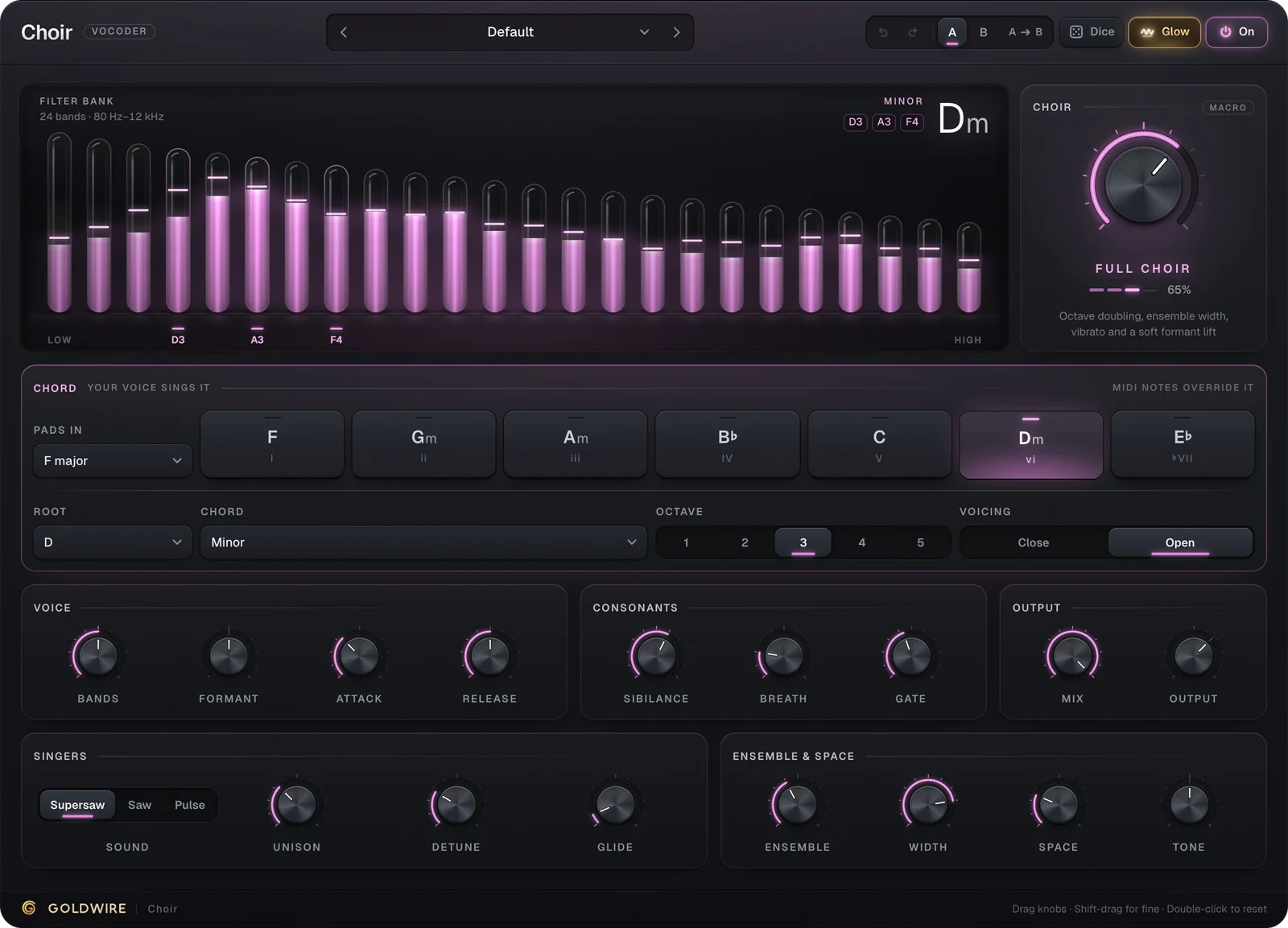
If you already own a good synth and like routing, a stock vocoder is enough. If you want the sound in one insert, a vocoder VST with its own synth is quicker: Choir has a supersaw, saw and pulse carrier with up to seven unison voices, a Key and Chord menu for when no MIDI is playing, and a Choir macro that adds octave doubling, ensemble width and vibrato.
Choir
MacroOctave doubling, ensemble width, vibrato and a soft formant lift
Chord
Your voice sings itVoice
Consonants
Output
Singers
Ensemble & space
The real plugin engine, running in your browser: same DSP code and presets as the VST3/AU/AAX.
Vocoder, harmonizer or autotune: which do you need?
These three get confused because they all change how a voice sounds in pitch. They do different jobs:
- A vocoder throws away the pitch of your voice and replaces it with the synth's notes. It sounds like a synth singing. Use it for robot voices, vocoded chords and pads.
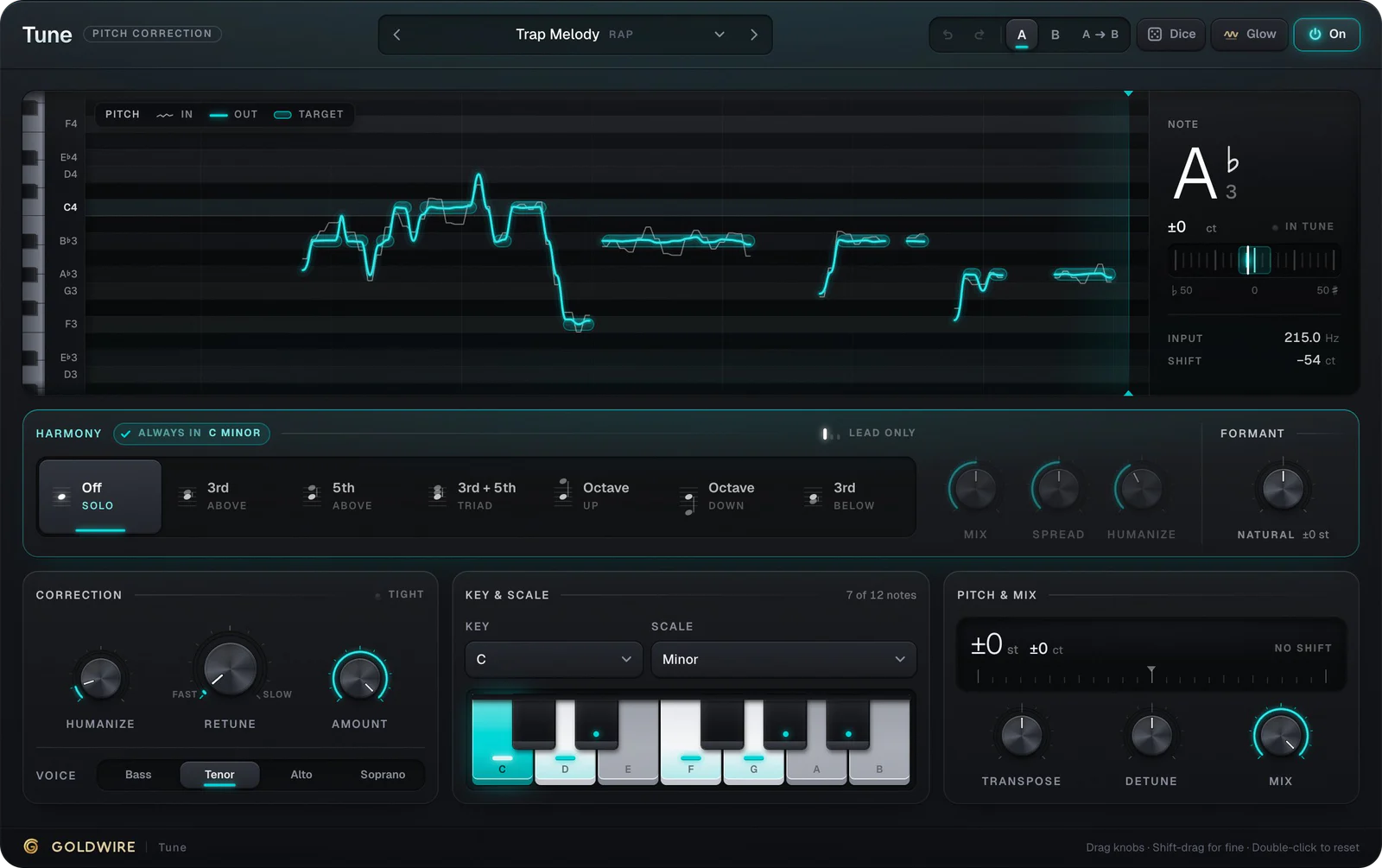
- A harmonizer keeps your voice and adds pitched copies at 3rds, 5ths or octaves. It sounds like more singers. Tune's Gospel Thirds and Pop Hook Stack presets do this in key.
- Autotune corrects the pitch of your own voice. Set fast, it gives the hard-tune effect; set slow, it's invisible. See our autotune plugins guide.
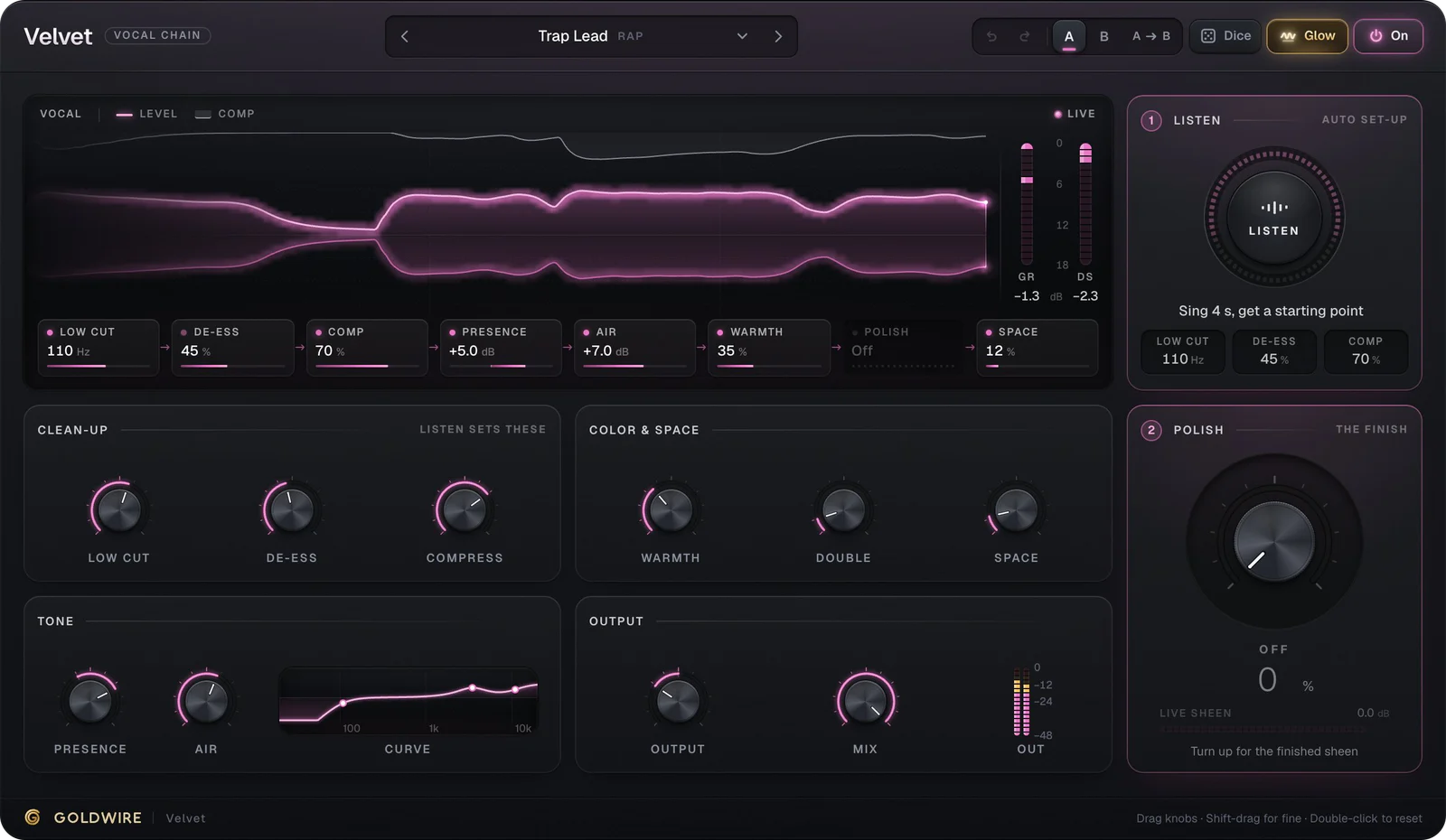
They also stack well. A tuned lead on top, a vocoded chord stack underneath and a harmonizer on the hook is a common pop and electronic arrangement. For the lead itself, a vocal chain such as Velvet handles de-essing, compression and air so the dry voice still cuts through the vocoder.
Vocoder settings for robot voices, choirs and pads
Robot voice
- Bands
- 8 to 16
- Attack and release
- Fast attack, 20 to 40 ms release
- Carrier
- One note, single saw
- Choir preset
- Robot Monotone
Vocoded chords
- Bands
- 16 to 24
- Attack and release
- Fast attack, 40 to 70 ms release
- Carrier
- Saw chords
- Choir preset
- Disco Robot Chords
Choir
- Bands
- 24 to 32
- Attack and release
- Fast attack, 90 to 120 ms release
- Carrier
- Supersaw, wide voicing
- Choir preset
- Cathedral Choir
Pad
- Bands
- Any
- Attack and release
- Slow attack, 300 ms+ release
- Carrier
- Sustained chord
- Choir preset
- Angelic Sus Pad
Two habits help any vocoder. Record the modulator close to the mic and fairly dry, because room sound turns into a smear. And use a gate (Choir has one built in) so headphone bleed and breaths don't trigger the synth between phrases. For the talkbox-style lead, the difference between the two effects is explained in vocoder vs talkbox.
Hardware and keyboard vocoders
A keyboard vocoder is a synth with a vocoder and a mic input built in, often with a gooseneck vocoder mic, so you sing and play chords on one instrument. Compact synths such as the Korg microKORG and voice processors such as the Roland VT-4 are well-known examples. They're handy on stage. In the studio, a vocoder plugin does the same job, recalls with the session and doesn't need a free hardware input.
Classic analog vocoders such as the Korg VC-10 and Roland VP-330, both from the late 1970s, used banks of analog filters, and their soft, slightly blurred tone is what most vintage vocoder presets imitate. For that analog vocoder sound in Choir, start from Vintage 10-Band (10 bands, a single saw voice) or Analog 16-Band Strings (16 bands with a wide ensemble).
Vocoder plugins in Ableton, FL Studio, Pro Tools and Logic
- Ableton Live: Live's Vocoder (Standard and Suite) goes on the vocal track, with Carrier set to External and the synth track as the source. Choir works in any edition. Step by step: how to use a vocoder in Ableton.
- FL Studio: Vocodex comes with some editions. Choir loads on the vocal's Mixer insert, and a MIDI Out channel can send it chords. See plugins for FL Studio.
- Pro Tools: Choir comes as AAX. Insert it on the vocal track and send it chords from a MIDI track. See plugins for Pro Tools.
- Logic Pro: EVOC 20 PolySynth is built in. Choir loads as an AU on the vocal channel strip.