Dark chord progressions
i–♭II
- In A minor
- Am – B♭
- Sound
- Phrygian: the half step above the root sounds threatening
i–♭II–VI–V
- In A minor
- Am – B♭ – F – E
- Sound
- UK and NY drill: sinister and tense
i–iv–V–i
- In A minor
- Am – Dm – E – Am
- Sound
- Harmonic minor: gothic, classical, final
i–ii°–V–i
- In A minor
- Am – B° – E – Am
- Sound
- Diminished tension: horror-film suspense
i–VI–iv–V
- In A minor
- Am – F – Dm – E
- Sound
- Cinematic drama, ends on a cliffhanger
i–♭II–i–V
- In A minor
- Am – B♭ – Am – E
- Sound
- Epic and ominous: trailers and boss fights
What makes chords sound dark
- Half steps against the root: B♭ over A (the ♭II) and E's G♯ against A minor's G are the darkest intervals in a key.
- Diminished chords: B° (B–D–F) has a tritone inside it, which never sounds settled.
- Harmonic minor: a major V in a minor key gives the exotic, gothic colour of film scores and trap melodies.
- Low, tight voicings: dark piano chords sit in the octave below middle C, often as bare minor triads or root and fifth with the minor 3rd on top.
- Chromatic colours to try by hand: a minor chord with a major 7th (Am(maj7)), or a jump to the minor chord a major third below (Am to Fm), the classic villain move.
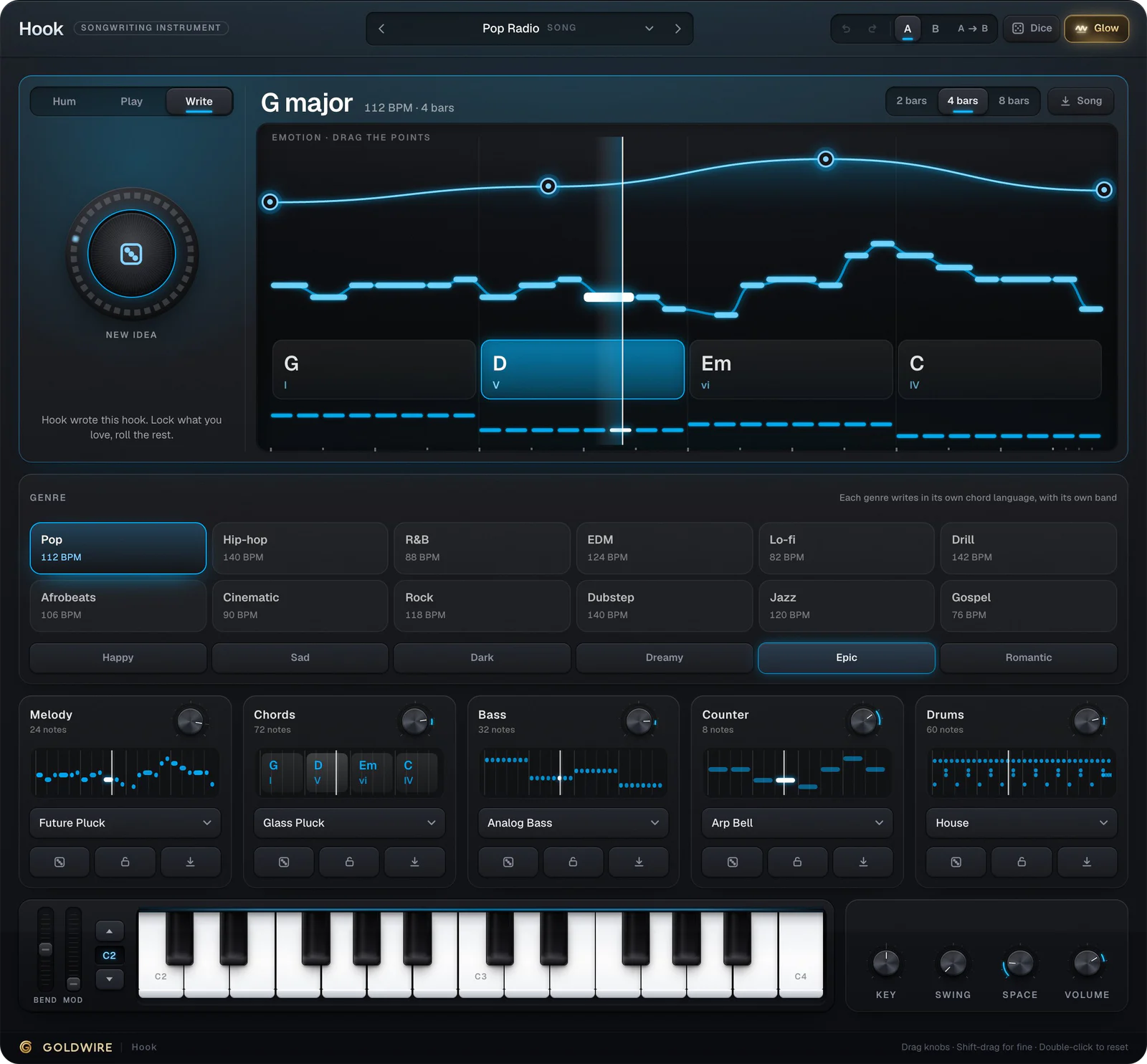
Play these in our free chord progression generator: pick Drill or Cinematic, set the mood to Dark, press play, then hum a melody and it re-harmonises around you.
More chord progressions
Chord progressions by genre and mood: jazz, gospel, neo-soul, rock, house, trap and hip-hop, minor, sad, happy, emotional, beautiful, R&B, country, EDM and piano. To learn why they work, read how to write a hit song.