Emotional chord progressions
vi–IV–I–V
- In C major / A minor
- Am – F – C – G
- Emotion
- Sad and hopeful at the same time
I–V–vi–IV
- In C major / A minor
- C – G – Am – F
- Emotion
- Big, open-hearted ballad chorus
I–V–vi–iii–IV–I–IV–V
- In C major / A minor
- C – G – Am – Em – F – C – F – G
- Emotion
- Pachelbel's Canon: tender, wedding-day emotion
IV–iv–I
- In C major / A minor
- F – Fm – C
- Emotion
- The tear-jerker: a major chord turns minor
I–♭VI–♭VII–I
- In C major / A minor
- C – A♭ – B♭ – C
- Emotion
- Heroic and triumphant, straight from film
i–VI–III–VII
- In C major / A minor
- Am – F – C – G
- Emotion
- Epic minor anthem, builds into a drop
How to make a progression emotional
- Hold back first. Play the verse with fewer notes, lower and quieter, so the chorus has somewhere to go.
- Delay the home chord. Starting on vi or IV instead of I keeps the listener waiting for resolution.
- Borrow from minor. iv, ♭VI and ♭VII in a major key add longing (iv) or grandeur (♭VI–♭VII).
- Use suspensions. A sus4 or sus2 that resolves a beat later creates tension and release inside one chord.
- Let the melody rise in the chorus. A higher melody over the same chords reads as more emotional.
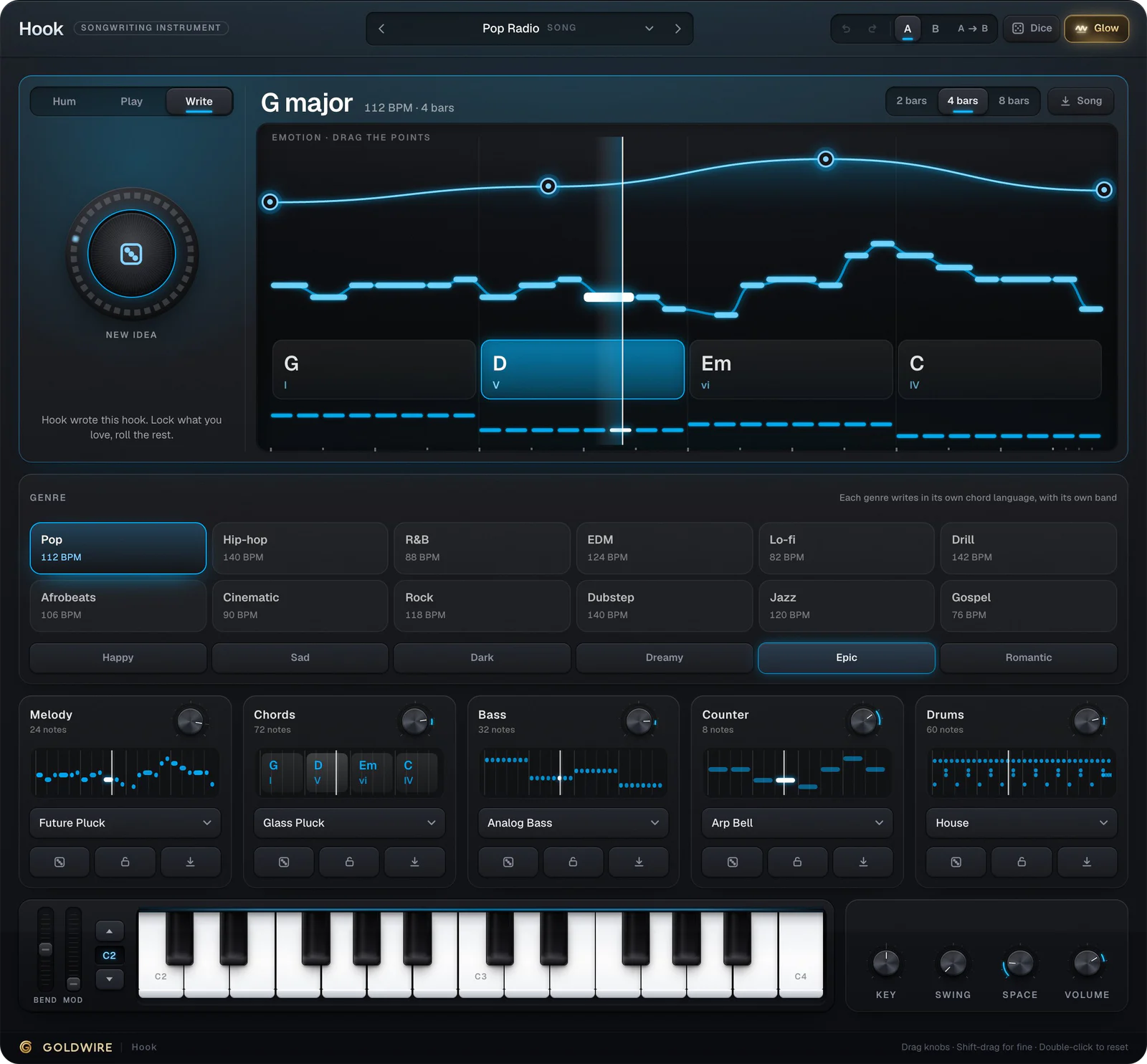
Hook's emotion curve does steps 1 and 5 for you: draw calm in the verse and peak in the chorus, and the harmony's tension and the band's energy follow. Read more in our song structure guide.
Play these in our free chord progression generator: pick Cinematic, set the mood to Epic, press play, then hum a melody and it re-harmonises around you.
More chord progressions
Chord progressions by genre and mood: jazz, gospel, neo-soul, rock, house, trap and hip-hop, minor, sad, happy, dark, beautiful, R&B, country, EDM and piano. To learn why they work, read how to write a hit song.