The chords in a minor key
In natural minor the chords run i – ii° – III – iv – v – VI – VII. In A minor that is Am, B°, C, Dm, Em, F and G: the same notes as C major, starting from A. Composers usually raise the 7th note in cadences (harmonic minor), which turns the minor v (Em) into a major V (E or E7). That one change is what makes a minor progression resolve with force instead of drifting.
Minor progressions to know
i–VI–III–VII
- In A minor
- Am – F – C – G
- Sound
- The modern minor loop: pop, EDM, trap, film
i–iv–v
- In A minor
- Am – Dm – Em
- Sound
- Natural minor: folky, soft, unresolved
i–iv–V
- In A minor
- Am – Dm – E
- Sound
- Harmonic minor: the major V pulls home hard
i–VII–VI–V
- In A minor
- Am – G – F – E
- Sound
- Andalusian cadence: a step-by-step falling bass
i–VI–iv–V
- In A minor
- Am – F – Dm – E
- Sound
- Dramatic, cinematic, ends on tension
i–iv–VII–III
- In A minor
- Am – Dm – G – C
- Sound
- Chain of fifths: smooth, jazzy, lo-fi
How to make a minor progression your own
- Pick v or V on purpose. A minor v keeps the loop moody and open; a major V (with its G♯ in A minor) gives a strong, classical pull back to i.
- Add 7ths for colour: Am7, Dm7, Fmaj7 and Cmaj7 make the same loop sound like R&B or lo-fi instead of rock.
- Walk the bass: the bass line A–G–F–E under i–VII–VI–V is the sound, so let the low notes move in steps.
- Change the rhythm before the chords: the same i–VI–III–VII is a ballad as whole notes and a club track as offbeat stabs.
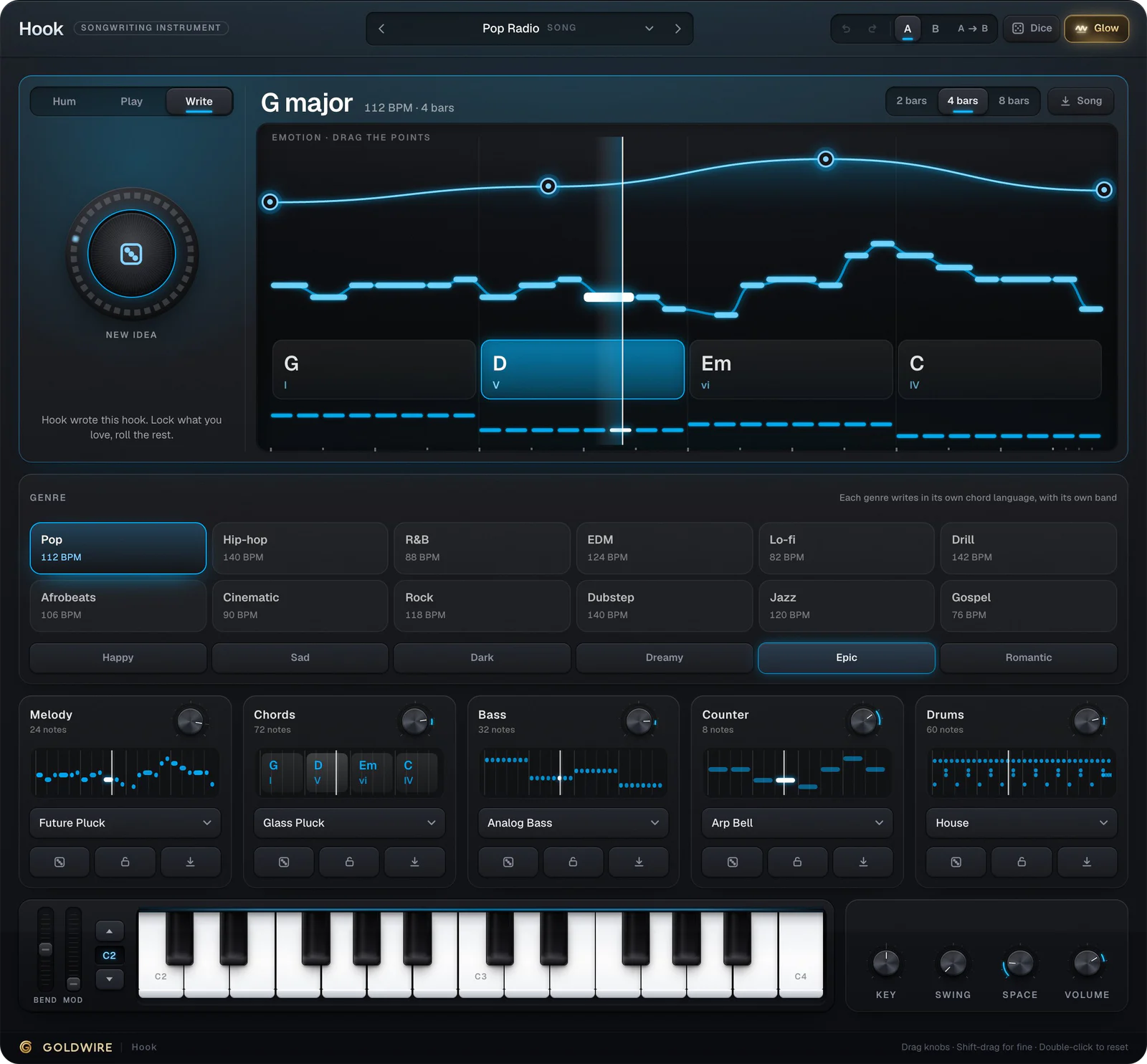
Play these in our free chord progression generator: pick Cinematic, set the mood to Sad or Dark, press play, then hum a melody and it re-harmonises around you.
More chord progressions
Chord progressions by genre and mood: jazz, gospel, neo-soul, rock, house, trap and hip-hop, sad, happy, dark, emotional, beautiful, R&B, country, EDM and piano. To learn why they work, read how to write a hit song.