Sad chord progressions
vi–IV–I–V
- In C major / A minor
- Am – F – C – G
- Feeling
- Bittersweet: sad verse, hopeful lift
I–iii–vi–IV
- In C major / A minor
- C – Em – Am – F
- Feeling
- Wistful, nostalgic, a little resigned
IV–iv–I
- In C major / A minor
- F – Fm – C
- Feeling
- Heartbreak: the borrowed minor iv aches
i–VI–iv–v
- In C major / A minor
- Am – F – Dm – Em
- Feeling
- Numb and cloudy, never resolves
i–iv–VI–V
- In C major / A minor
- Am – Dm – F – E
- Feeling
- Crying out: the major V adds tension
i–VII–VI–V
- In C major / A minor
- Am – G – F – E
- Feeling
- A falling lament bass
What makes chords sound sad
- Minor chords and the minor 3rd: the minor 3rd (C over A in Am) is what we hear as sad. Start the loop on the minor chord.
- A minor iv in a major key: F to Fm before C is the most efficient tear-jerker in pop; the A falls to A♭ by a half step.
- Falling bass lines: bass notes that step down (A–G–F–E) feel like sinking.
- Slow tempo and space: 60 to 80 BPM, long notes, and a melody that rests between phrases.
- Soft, close voicings: piano in the middle register, or a warm pad. Add 7ths and 9ths (Am9, Fmaj7) for an aching, unresolved colour.
For sad piano chords, keep the right hand close together and move as few notes as possible from chord to chord. Our piano chord progressions page shows the inversions that make that easy.
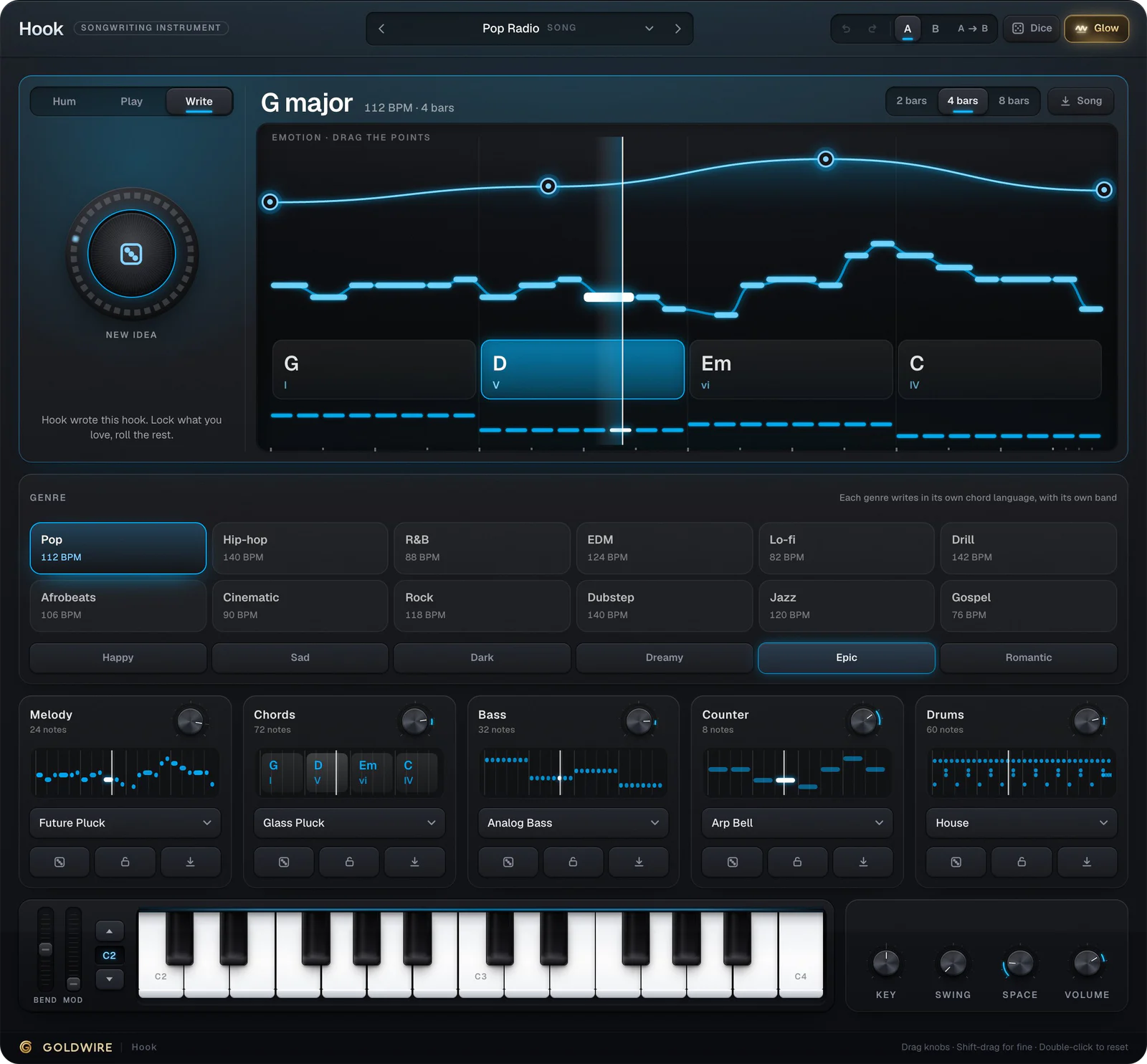
Play these in our free chord progression generator: pick Pop or Hip-hop / Trap, set the mood to Sad, press play, then hum a melody and it re-harmonises around you.
More chord progressions
Chord progressions by genre and mood: jazz, gospel, neo-soul, rock, house, trap and hip-hop, minor, happy, dark, emotional, beautiful, R&B, country, EDM and piano. To learn why they work, read how to write a hit song.